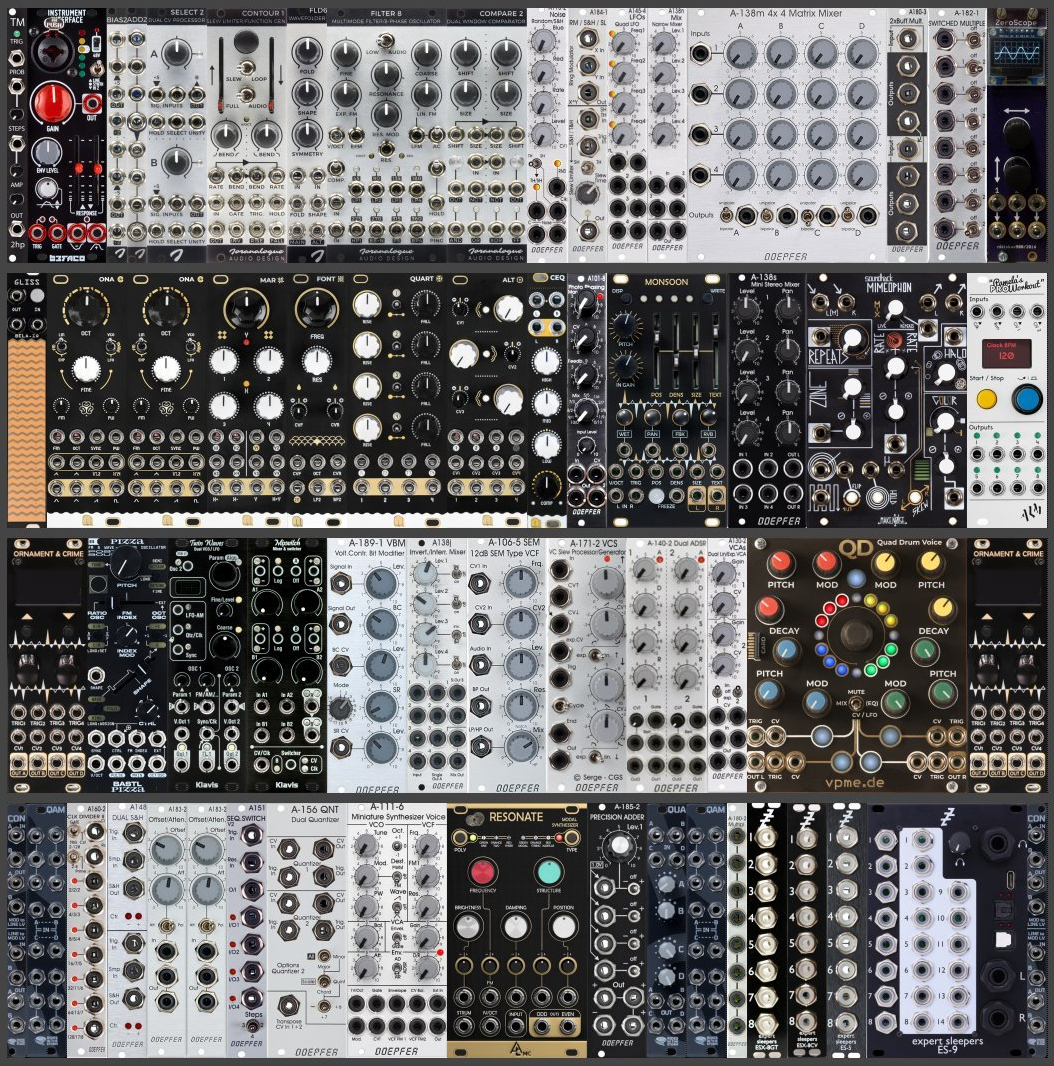
A hatful of rough cuts from live improvisations on a Modular Synthesizer, Mavrovouni, Greece, February 2025.
Raw output, no post-processing.
Audio interloper
A hatful of rough cuts from live improvisations on a Modular Synthesizer, Mavrovouni, Greece, February 2025.
Raw output, no post-processing.
He went off-the-rails for about a decade with tedious shite, but now back to banging techno and better than ever IMO.
The chords of the Dorian mode are a specific set of diatonic triads and seventh chords that give it its unique sound. The Dorian mode is the second mode of the major scale, and its most defining feature is the major 6th interval, which distinguishes it from the natural minor scale.
The Dorian mode’s chord qualities follow a specific pattern. Let’s use the key of D Dorian as an example. The notes are D, E, F, G, A, B, C.
The two chords that are most important for creating a “Dorian sound” are the IV (Major) and ♭VII (Major) chords. Progressions that use these chords, such as i-IV (Dm-G) or i-♭VII (Dm-C), immediately establish the modal quality and avoid the typical minor key feel.
Best tools and tutorials I have found for learning triads…..
https://guitarstreams.com/tool/fretboard/
@7.33 Herbie shows how it’s done on an Arp Odyssey

 NoisyLittleBugger